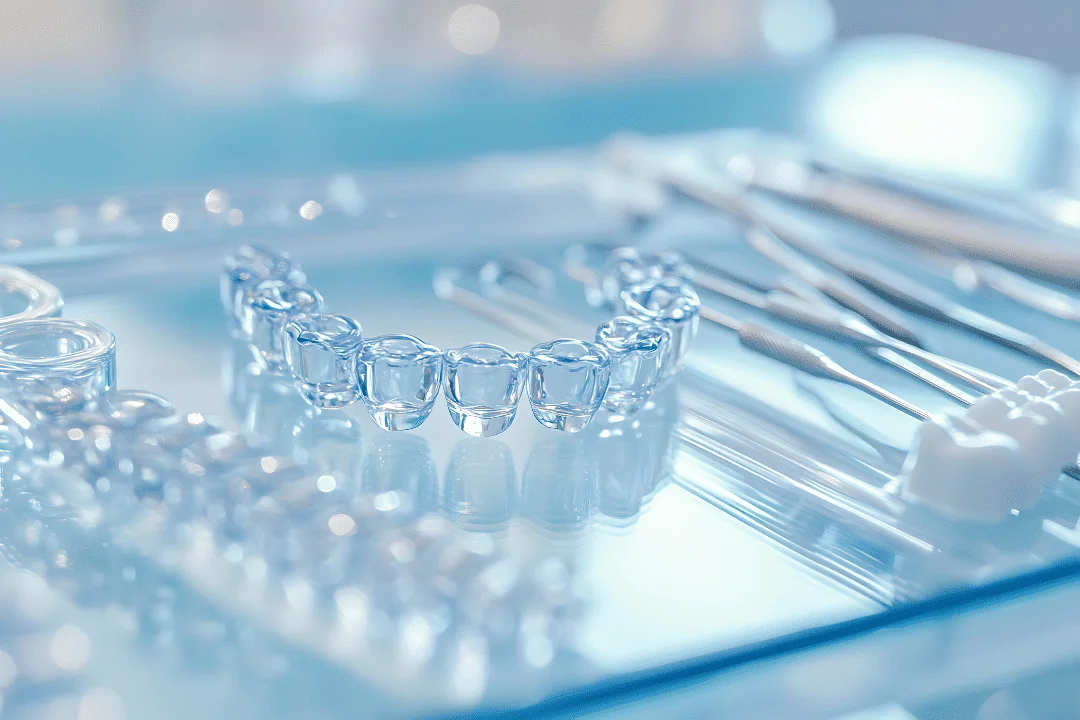
When people begin Invisalign orthodontic treatment, one of the first questions they ask is, “How long will this take?” And more importantly, “Why do some people finish treatment faster than others?” It’s a fair question especially when you compare friends or family members who may have very different Invisalign treatment time even though they’re all using the same system of clear aligners. The truth is, Invisalign isn’t a one speed fits all treatment. Several biological, anatomical, and lifestyle factors determine how quickly teeth move, how efficiently aligners work, and how predictable the results will be. Everything from jaw shape to gum health even how often someone wears their trays can influence speed. So while many start Invisalign with a rough estimate in mind, the actual timeline is shaped by a complex set of variables that differ from patient to patient. If you’re searching for Invisalign places in Brooklyn or exploring Invisalign for adults, understanding this science can help set the right expectations. This guide breaks down why two people with similar goals can have very different treatment speeds and how Invisalign orthodontic treatment works with your biology to shift teeth safely, efficiently, and predictably.
The Science Behind How Invisalign Moves Teeth
Clear aligners are more than a cosmetic alternative to braces; they rely on biomechanics, pressure systems, bone remodeling, and patient compliance. Understanding these fundamentals makes it easier to see why Invisalign treatment time varies.

Biological Bone Remodeling: Why Some People Respond Faster
Tooth movement relies on bone remodeling, a natural process where bone breaks down and rebuilds in response to pressure. When Invisalign applies controlled force:
- Bone on one side of the tooth dissolves
- Bone on the opposite side rebuilds
- The tooth gradually shifts into its planned position
Some patients naturally remodel bone faster due to:
- Younger age
- Higher metabolism
- Better bone density
- Strong periodontal support
This explains why Invisalign for adults generally takes slightly longer than it does for teens not because adults can’t move teeth, but because bone turnover naturally slows with age.
Tooth Root Length & Shape Influence Movement Speed
Not all roots are shaped the same. Some are long and straight, others are curved or tapered. Root structure affects movement because:
- Longer roots = more stability = slower movement
- Shorter roots = less resistance = faster movement
- Curved roots = biomechanically complex movement
This is one reason patients with identical aligner counts may finish at different times.
The Complexity of Tooth Rotation and Torque
Minor spacing? Fast. Mild crowding? Moderately fast. Tooth rotation or torque? Significantly slower. Some teeth, especially canines are notoriously stubborn due to thick roots and grip within the bone. Rotations require more force and more refinement trays, increasing the overall Invisalign treatment time.
Alignment Issues That Affect Invisalign Treatment Time
Your unique orthodontic diagnosis shapes how quickly clear aligners can work. While Invisalign handles a wide range of cases, certain bite issues or tooth movements take more time.

Overbites and Deep Bites Can Extend Timelines
Deep bites require:
- Vertical movement of teeth
- Precise control of molars
- Significant bite opening
Because vertical movement is naturally slower than horizontal, patients with deep bites often experience longer treatment times even with consistent wear.
Underbites and Complex Jaw Relationships Require More Refinement
Underbites may require:
- Molar adjustments
- Class III corrections
- Elastics to support jaw movement
These finer biomechanical details add extra months to some patients’ timelines.
Crowd Control: Why Moderate and Severe Crowding Move Slower
Crowding requires creating space, which may involve:
- Expanding the dental arch
- Strategically rotating certain teeth
- Repositioning teeth backward or forward
Small adjustments are easy but complex movements require more aligners and longer tracking time.
Compliance: The Biggest Predictor of Invisalign Speed
Even though Invisalign orthodontic treatment is highly scientific, one non-biological factor plays a massive role in speed: patient compliance.

The Wear-Time Rule That Makes or Breaks Treatment
Aligners work only when they’re worn consistently. Patients should wear trays:
- 20–22 hours per day
- Removing only for meals, coffee, or brushing
- Replacing trays immediately after
Patients who average 16 – 18 hours per day of wear time nearly always experience slower Invisalign treatment time. Aligner pressure resets every time the trays are removed, delaying progress.
Eating, Snacking, and Coffee Breaks Add Up
Constantly removing trays for small snacks or drinks leads to:
- Less active pressure time
- More tray removal interruptions
- Delayed biological remodeling
Even a few lost hours a day can add weeks or months to treatment.
Compliance Apps, SmartTrack Material, and Attachments Improve Speed
Modern Invisalign systems now include:
- Wear-tracking apps
- SmartForce attachments
- More flexible SmartTrack plastics
These help improve efficiency and reduce inconsistencies but patient behavior is still the biggest factor.
Age, Lifestyle, and Oral Health Factors That Influence Treatment Speed
Beyond compliance and case complexity, several biological and lifestyle elements significantly impact Invisalign treatment time.
Age and Bone Density
Adults can absolutely achieve excellent results with Invisalign for adults, but tooth movement may be slower due to:
- Lower bone turnover
- Reduced cellular activity
- Denser jawbone
This doesn’t stop treatment; it simply requires more aligners or refinements.
Gum Health and Periodontal Support
Healthy gums = predictable movement Inflamed gums = slower, inconsistent movement Periodontal problems can cause:
- Soreness
- Delayed movement
- Increased treatment time
Orthodontists always check gum conditions before starting Invisalign orthodontic treatment.
Stress, Grinding, and Tooth Clenching
Bruxism (clenching and grinding) can:
- Push teeth out of position
- Create aligner fit issues
- Cause trays to crack
- Slow the tracking process
Clear aligners act as a buffer, but grinding may still slow progress.
Why Two Patients Can Have the Same Case but Different Speeds
Even when two patients share the same diagnosis such as mild spacing or moderate crowding their treatment times can differ dramatically.
Differences in Jaw Shape and Arch Width
Wider arches often respond faster because there is more natural room for movement. Narrow arches require slower expansion.
Differences in Tooth Stability
Teeth with thicker ligaments or denser supporting bone resist movement, slowing treatment.
Aligner Fit & Trackability
If aligners stop fully “tracking” (fitting perfectly), refinements are required, increasing overall time.
Clear Aligners vs Patient Biology How They Work Together

Invisalign orthodontic treatment is a partnership between:
- The biology of the patient
- The biomechanics of clear aligners
- The precision of the treatment plan
- The patient’s day-to-day discipline
When all four sync together, treatment speeds up. When one lags behind, timelines extend.
Common Questions About Invisalign Treatment Time
Can I make Invisalign go faster?
Wearing aligners 22 hours daily is the #1 factor. No shortcuts.
Do accelerated devices help?
Vibration devices have mixed research; compliance is still king.
Do attachments slow treatment down?
Attachments actually speed up difficult movements.
Why is my friend’s Invisalign faster?
Their biology, compliance, or case complexity may differ.
Ready to Learn What Your Invisalign Timeline Could Be?
If you’re considering Invisalign orthodontic treatment, the best way to understand your personal timeline is through an in-person evaluation. Every patient’s biology is unique, and the speed of tooth movement depends on factors that can’t be identified online. Whether you’re researching Invisalign places near me, comparing options, or wondering about your own Invisalign treatment time, a professional assessment is the most accurate way to set expectations.
Schedule Your Invisalign Consultation Today
Want to know how fast your teeth can move with Invisalign at ARK Esthetics in Brooklyn? Contact us to schedule a personalized consultation. ARK Esthetics in Brooklyn will evaluate your smile, discuss your goals, and create a customized Invisalign orthodontic treatment plan tailored to your unique biology and timeline.


 549 Myrtle Ave, Brooklyn, NY 11205, United States
 Info@arkesthetics.com